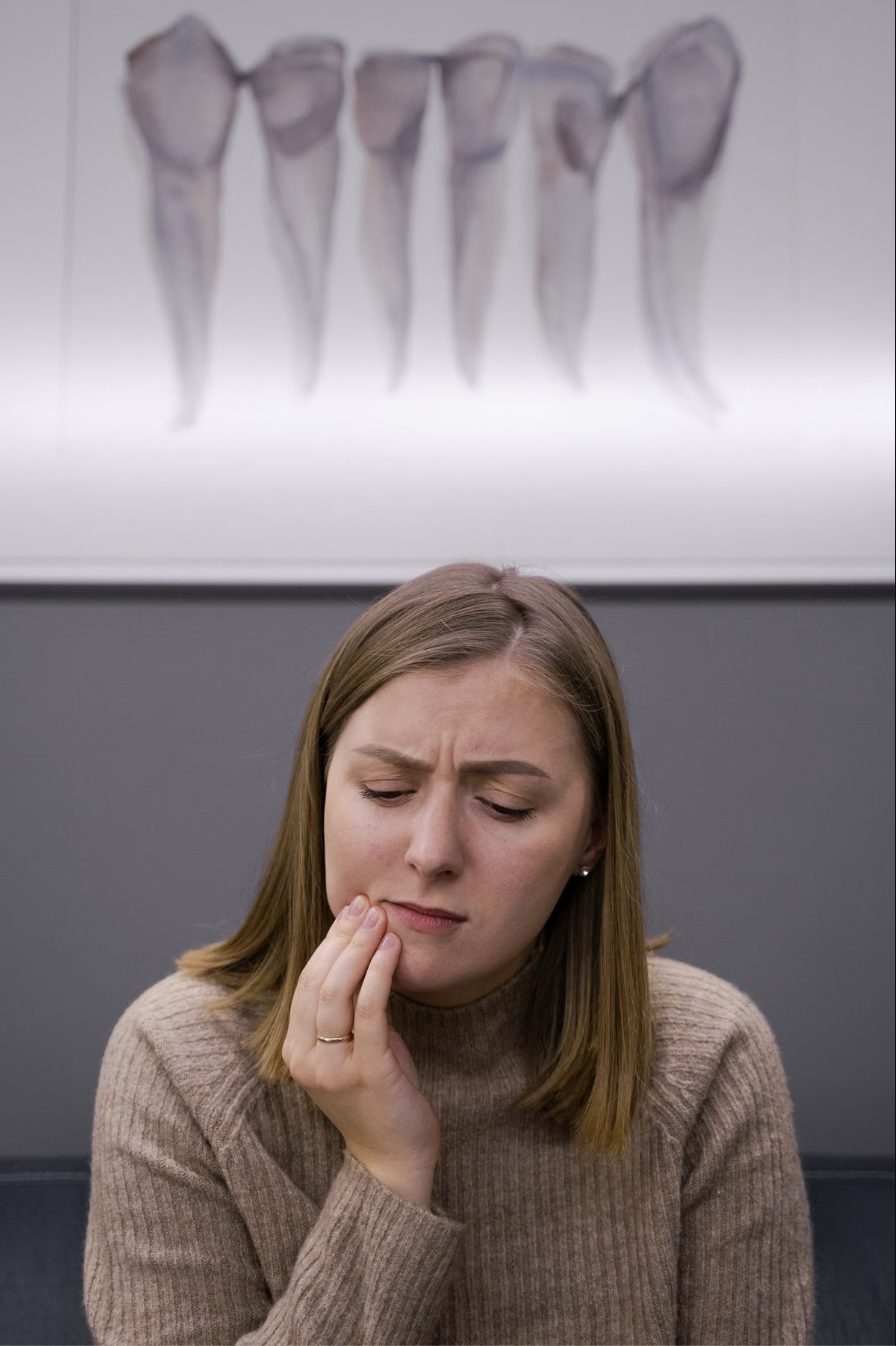
Your emergency exam: finding what's really going on
Assessment and Next Steps
Your visit starts with an examination of the painful area and any tests or images needed to help find the cause.
Tooth pain can come from many different things, and they're treated in very different ways:
A cavity. Decay can reach sensitive areas of the tooth. Treatment depends on its depth and the condition of the tooth.
Wisdom teeth. Pressure or throbbing at the back corners of your jaw often means a third molar coming in sideways or trapping food under the gum.
TMJ / jaw problems. Sometimes the "toothache" isn't a tooth at all — clenching and grinding can make teeth and jaw muscles ache, especially in the morning.
A broken or cracked tooth. Pain when biting can be a sign of a crack. Prompt assessment helps us determine whether and how the tooth can be protected.
Gum infection. Swollen, tender gums near the tooth can mimic tooth pain — and need their own treatment to resolve.
We’ll review the findings with you, discuss how to manage your symptoms, and explain any further tests, treatment, or specialist care you may need.